
Authenticity Vs Controversy
Promoting has at all times mirrored the values of its time. Millennials grew up in an period the place promoting was pushed by old-school advertising and marketing strategies — “intercourse sells” and controversy for controversy’s sake. The mantra was typically “higher to ask forgiveness than search permission.” Hype was constructed round shock worth, even when the campaigns bordered on the weird. Consider Balenciaga’s polarising stunts or Mschf’s viral “Large Purple Boots”. Gen Z, however, refuses to play by these guidelines. Raised within the age of cancel tradition and public accountability, they’re sharper of their convictions — typically polarised to the ultra-right or ultra-left — and unafraid to vote with their wallets. Their calls for are clear — transparency, sustainability and genuine storytelling that displays a various vary of shapes, races and identities.
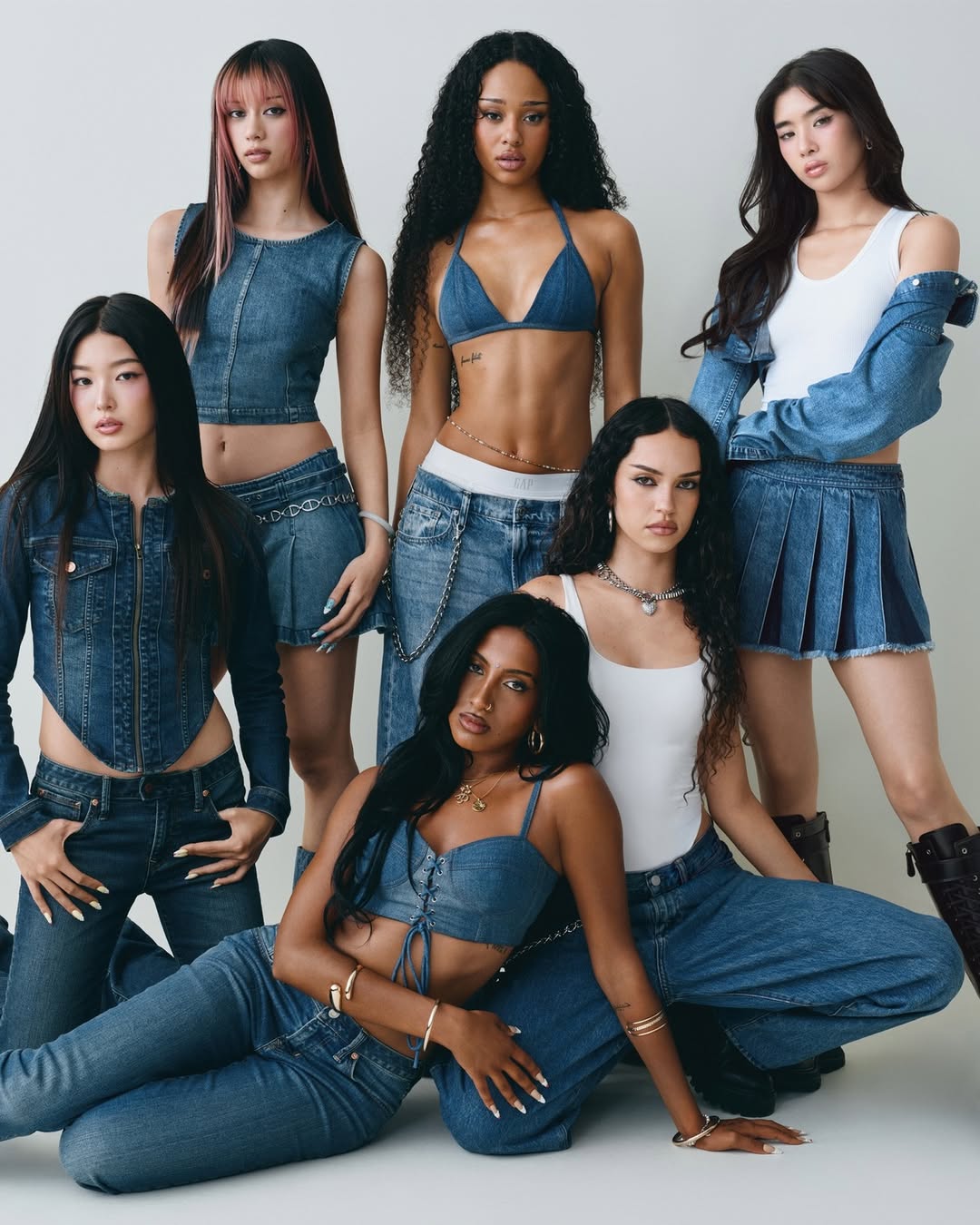
In contrast to Millennials, who grew up on slogans and taglines, Gen Z communicates in actions and memes — a era that speaks by TikTok dances relatively than prolonged captions. Phrases carry weight and in an period the place language can age poorly or be weaponised, expression by developments feels safer, quicker and extra highly effective, even when the outcome seems “cringe.” It isn’t in regards to the dance itself, however the cultural momentum it creates. That is precisely what made GAP’s “Higher in Denim” marketing campaign with Katseye profitable.
Amasing over 20 million views in simply two weeks, the video sees the lady group with numerous members from the Philippines, South Korea, Switzerland and the USA dancing to a cherographed performace to Kelis’ salacious 2003 anthem, “Milkshake”. Shortly after its launch, followers on social media created their very own reels and TikToks recreating the dance which solely generated the excitement across the Hole marketing campaign. It is a prime instance of a profitable advertising and marketing marketing campaign. The mixture of the video’s unapologetic self-expression added then with a alternative of tune faucets into the continuing cultural pattern of Y2K nostalgia made the marketing campaign culturally resonant.
Learn Extra: Style Business Banks on The Rise of Collectible Tradition
View this publish on Instagram
TikTok dance recreations, tags and hashtags solely amplify the cultural attain of a model like Hole. In distinction, Sydney Sweeney’s controversial but commercially profitable American Eagle marketing campaign leaned closely on promoting a sensual fantasy whereas enjoying on the pun: Sydney Sweeney has good “denims” (genes). What was supposed as cheeky wordplay shortly backfired, alienating segments of customers who pushed the dialog into darker territory round eugenics and race. The marketing campaign grew to become polarising and in response to potential boycotts, far-right — largely white — customers rallied behind it, reframing the controversy as successful and imposing the notion that sure, Sydney Sweeney does certainly have good “genes”.
Learn Extra: Gen Z’s Impression on the Way forward for Youth Tradition and Shopper Developments
In response to the backlash American Eagle acknowledged on their instagram that the marketing campaign “is and at all times was in regards to the denims. Her denims. Her story. We’ll proceed to rejoice how everybody wears their AE denims with confidence, their means. Nice denims look good on everybody” and on the time of writing, the movies and social media posts are nonetheless dwell, racking in thousands and thousands in accumulative views. This has additionally confirmed to be a worthwhile play for American Eagle because the model unviled it had seen a “double-digit enhance weeks after the viral launch”.
The Fragmentation of Gen Z’s Tastes
So how does this relate to the realm of luxurious style? Gen Zs lives on the intersection of final comfort and unprecedented discontent, the place meals, remedy and relationship are only a faucet away — but rising ranges of loneliness, nervousness and dissatisfaction reveal the hollowness of abundance. Regardless of being essentially the most related, resource-rich era in historical past, Gen Z’s declining happiness underscores the boundaries of comfort, revealing that deeper psychological and societal wants can’t be solved by expertise or consumption alone and this has a trickle down impact of their client preferences. Briefly, they’re spoilt for alternative and this alternative permits them to syphon their private beliefs into the equation. These private beliefs have an effect on their placement in “micro-scenes”.
Learn Extra: Influencer Advertising: Making Luxurious Relatable for Gen Zs
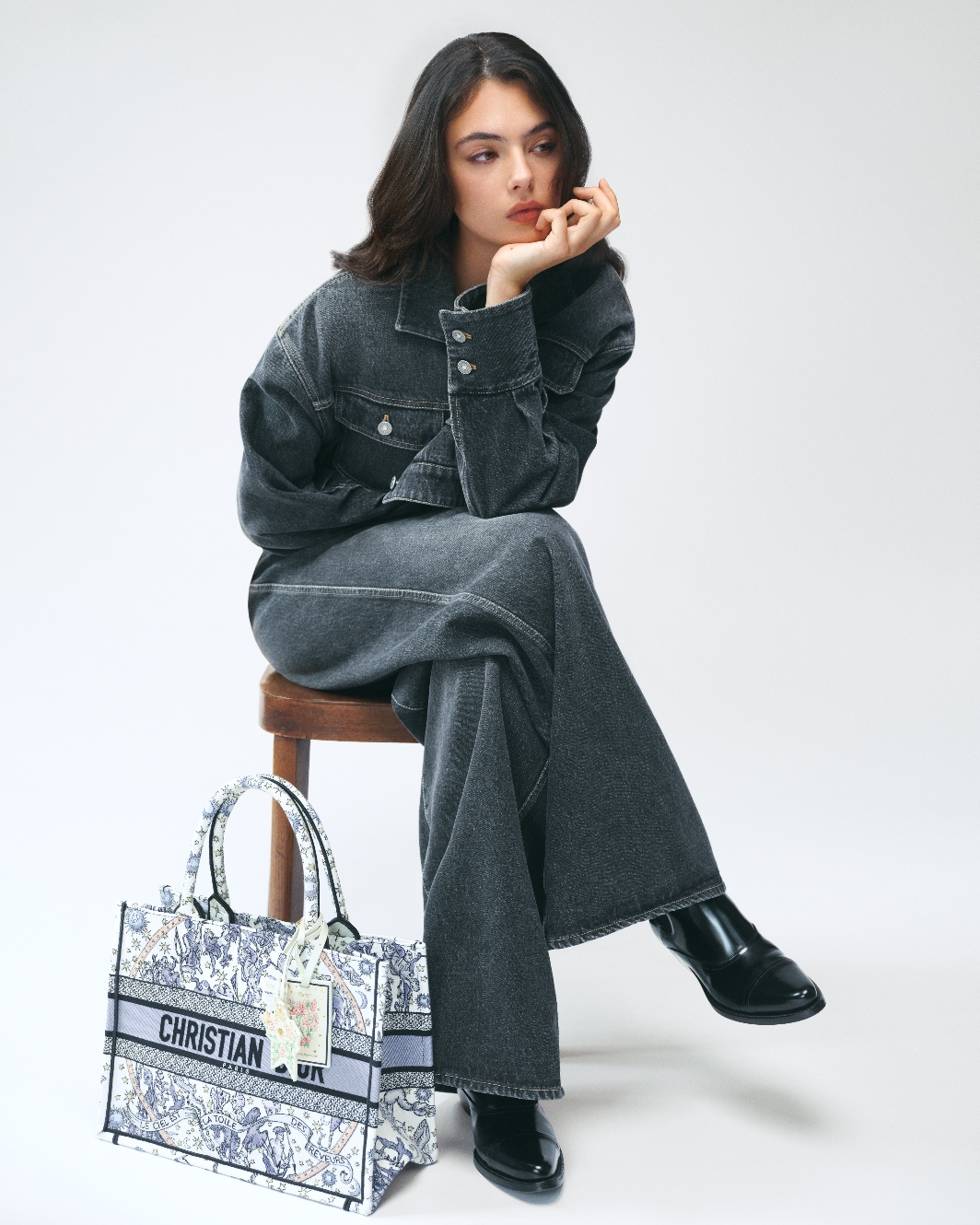
In contrast to Millennials, who have been unified by a couple of mega-trends like minimalism or athleisure as an example, Gen Zs splinters throughout micro-scenes corresponding to Y2K nostalgia, “gorpcore”, quiet luxurious, “coquette aesthetic” or “blokecore” to call a couple of. Maybe Millennials have been overwhelmed into societal submission of selecting “this” or “that”, Gen Zs refuse to fall into black and white classes. For luxurious, this makes focusing on extremely troublesome — a Dior bag might resonate with one sub-group, whereas one other sees it for instance of overt indulgence and would favor to buy the second-hand market as a substitute.
Deloitte experiences that Gen Z already makes up 25 % of the worldwide inhabitants — almost 2 billion individuals — and can surpass child boomers in spending energy, reaching USD 21.6 trillion inside the subsequent 5 years. But, their client behaviour is much from monolithic. In contrast to earlier generations, their identities are formed in actual time by digital environments, the place over 50 % want creators over celebrities as sources of affect and user-generated content material outperforms conventional media sevenfold.
Quite than a linear path to buy, Gen Z strikes by a nonstop discovery loop on social platforms, with 29 % extra more likely to make same-day purchases by way of social commerce. Nonetheless, model loyalty is now not assured — over half of Gen Z expects seamless experiences throughout cellular, on-line and in-store touchpoints, and they’re prepared to pay extra for this consistency. On the identical time, Deloitte highlights a 9 % decline in attire’s share of pockets amongst youthful customers, underscoring the shift towards polarised spending — both in premium tiers or discounted options, with the center floor eroding.
Learn Extra: Gen Z Extremism: How “Authenticity” Fuels Radical Views
On this fractured ecosystem, private beliefs and cultural affiliations weigh closely on client selections. 42 % of Gen Z say they’ve influenced another person’s shopping for resolution, reflecting how micro-scenes and digital tribes set the tone for developments, relatively than world mega-movements. For luxurious, this makes resonance way more elusive — what sparks need for one phase might signify exclusion or indulgence for an additional.
Luxurious Performs Catch-Up: Creating vs Chasing Developments
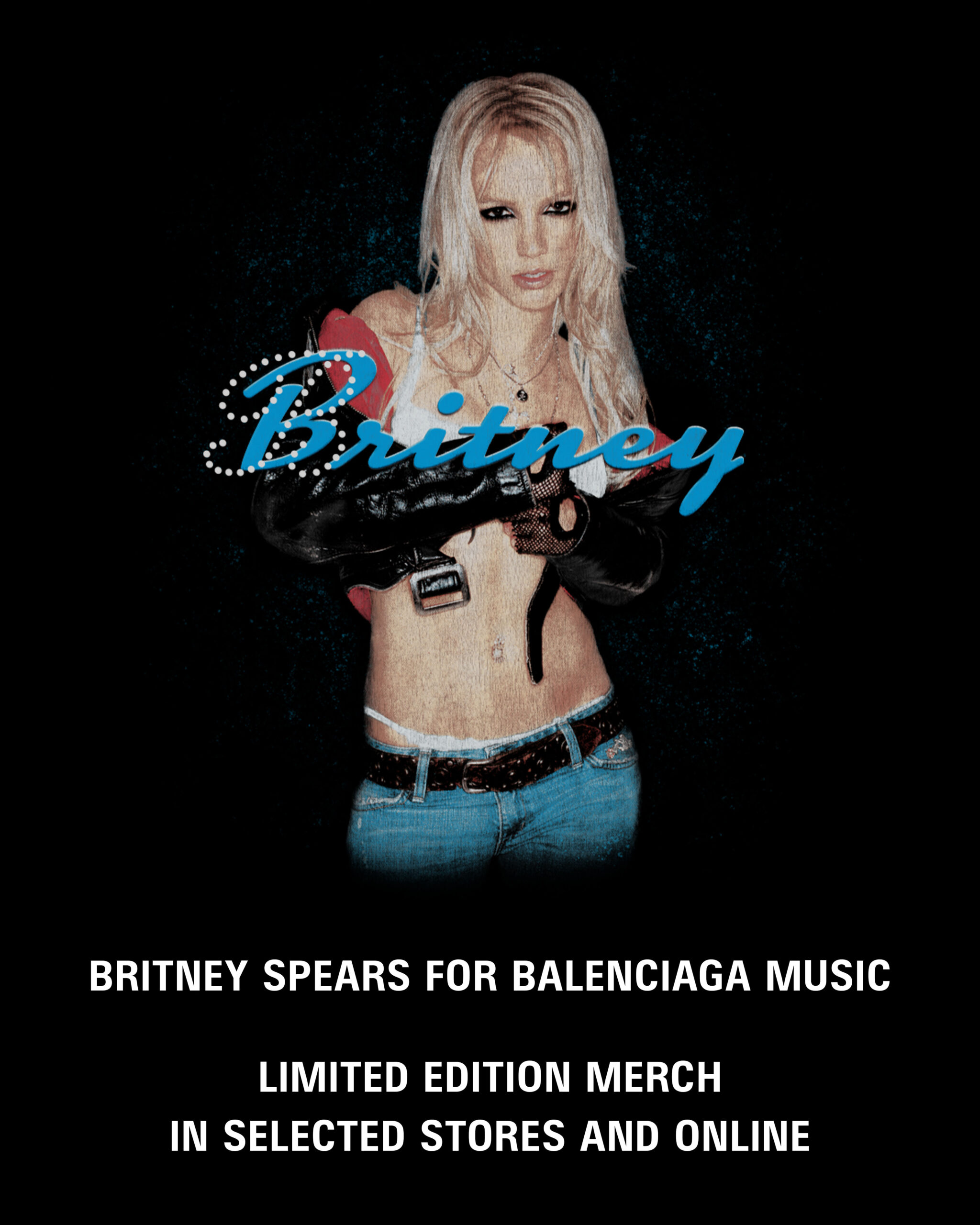
So how do manufacturers curtail this? In a bid to enchantment to a spread of customers, luxurious maisons unveil capsule collections, limited-edition releases and unique lauches tied to occasions and activations alongside cross-sector collaborations. If one launch doesn’t resonate with core customers or the model “signature”, nicely it is just restricted to a month — no hurt no foul. This then begs the query, are manufacturers creating or following developments? Traditionally, manufacturers set developments but now, micro-influencers and TikTok subcultures dictate style, fragmenting the market and it’s the luxurious manufacturers left to scramble with the shift. Manufacturers like Prada and Dior more and more accomplice with digital creators (some with beneath 100k followers) to entry area of interest communities — signalling a reversal the place affect flows bottom-up, not top-down.
View this publish on Instagram
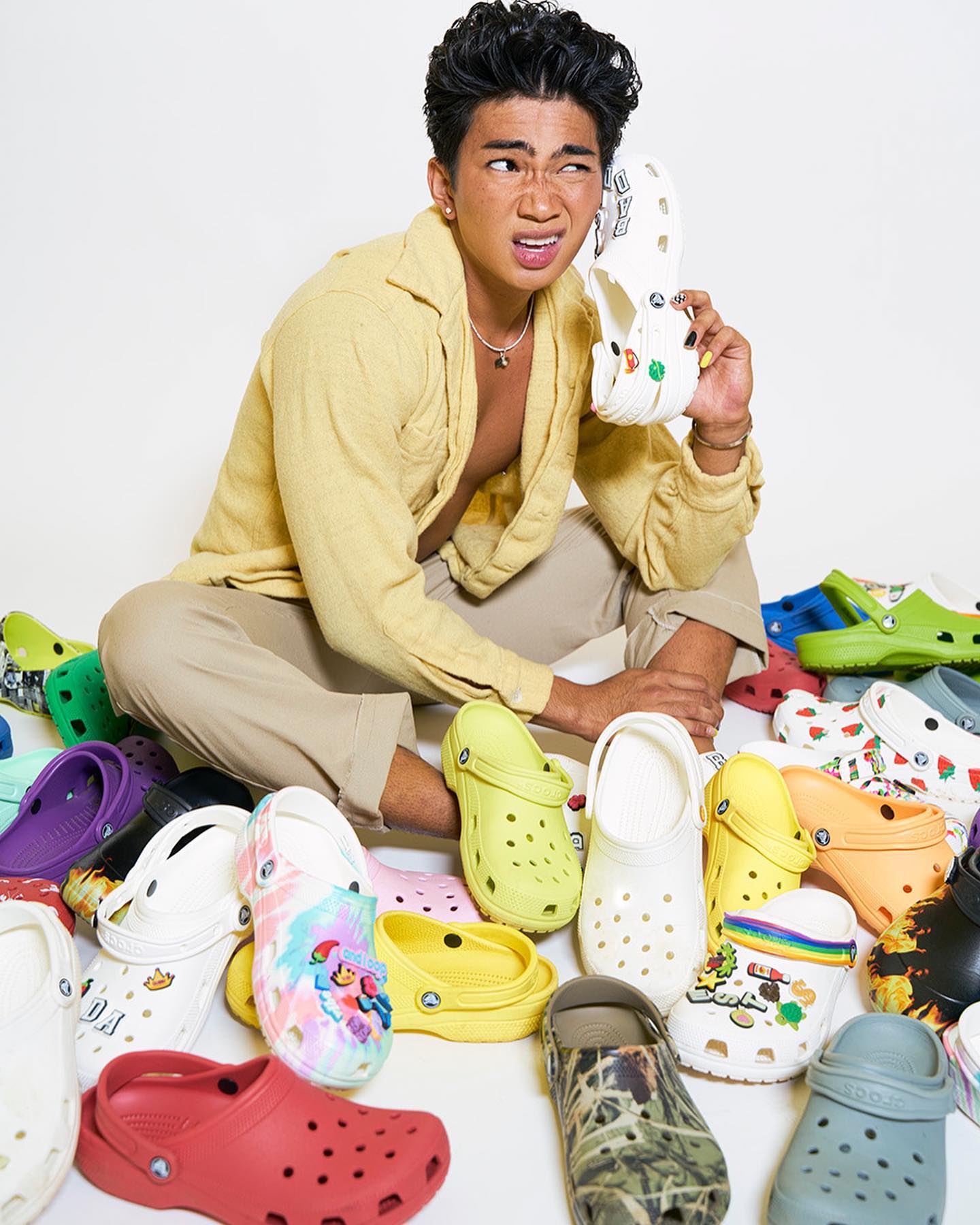
Manufacturers significantly leverage the facility of social media influecers when they’re planning of a rebrand. Living proof, the aforementioned Hole marketing campaign alongside UGGs and Crocs. As a model, UGGs skilled a large recognition decline within the 2010s, with its signature sheepskin boots extensively thought of “outdated” and “retro”. The revival of UGGs relied on a multi-pronged technique that not solely shed the model’s one-dimensional, boot-only picture but in addition leaned into the wave of Y2K nostalgia — a pattern it satirically helped form within the first place. Crocs, in contrast, underwent a much more dramatic picture overhaul, clawing their means again from being labelled a “crime of style”. Tapping Gen Z influencers like Bretman Rock was instrumental on this shift. At the moment, whereas Millennials should scrunch their noses at a pair, Gen Z has embraced them as ironic, playful staples that blur the road between “ugly and funky”.
With polarising developments and much more polarising cultural views, manufacturers realise they will now not enchantment (and appease) everybody. For Gen Z, the foundations have shifted. Raised in a tradition of accountability, they demand transparency, range and authenticity, whereas navigating digital areas the place affect is on the spot and fragmented. The stress between authenticity and controversy has by no means been extra seen and types are being pressured to rethink what cultural resonance actually means.
Learn Extra: Luxurious Spirits Manufacturers Recalibrate Methods to Enchantment to a New Technology of Shoppers
For extra on the newest in luxurious style and magnificence reads, click on right here.
The publish Opinion: A Millennial’s Tackle How Gen Zs Are Influencing Manufacturers appeared first on LUXUO.